
Municipal Court Warrants in Marion County
Marion County municipal courts hear local ordinance matters along with qualifying traffic and summary cases. Skip a required appearance or break a court condition, and that city court can issue its own process. The court named on the citation is always the best starting point for the city's case. South Carolina sources speak of bench warrants and arrest warrants; Marion's own materials do not use capias as a local term. One caution worth keeping: a city warrant is neither a new conviction nor a countywide list entry.
Which Cities Have Municipal Courts
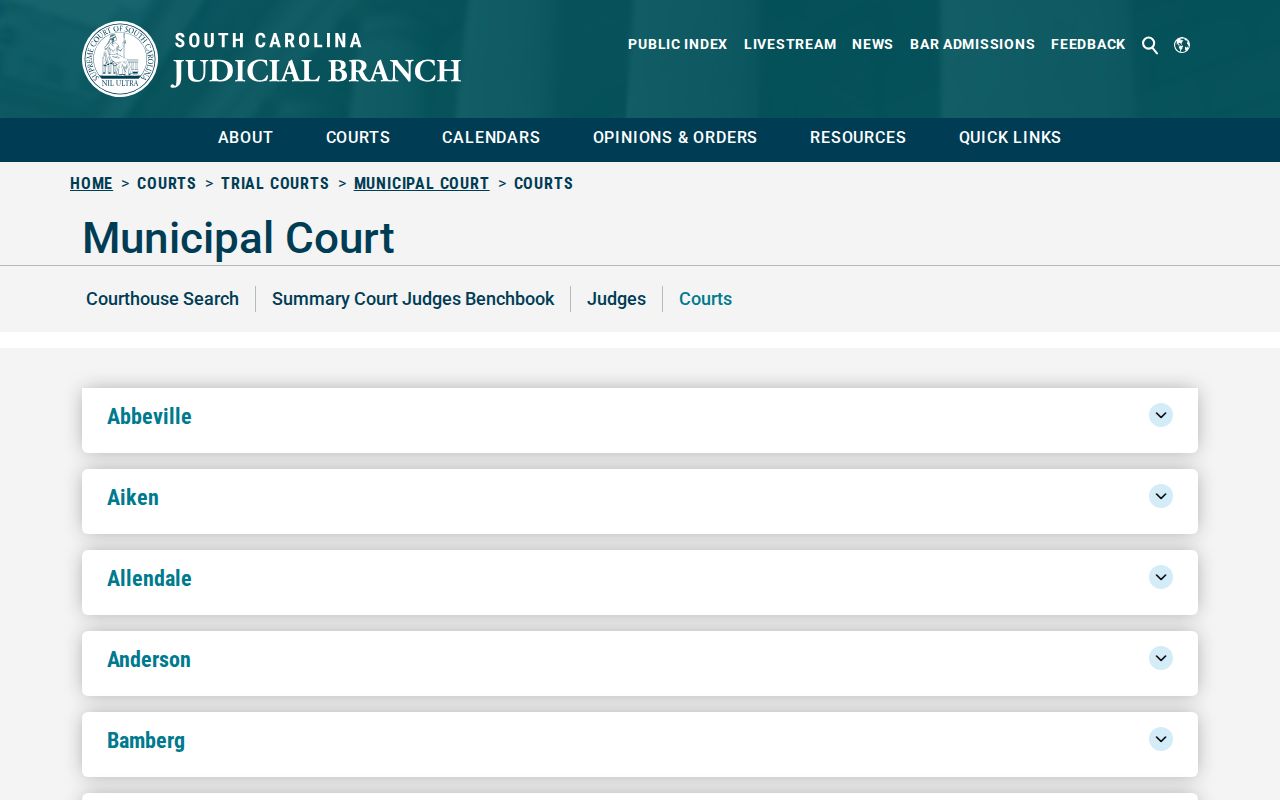
The Judicial Branch directory lists municipal courts in Marion, Mullins, Nichols, and Sellers, and Marion County's traffic page notes that those cities sit outside its online summary-court payment path. Open the official South Carolina municipal court directory to confirm current names and contact details before you travel.
For an answer about a specific Marion County case, call the court named on the ticket rather than trusting the countywide listing alone.
| Court | Contact | Local note |
|---|---|---|
| Marion | (843) 423-8616 | 1024 S Main St; City page lists Ext. 305 |
| Mullins | (843) 464-0707 | 151 E Front St |
| Nichols | (843) 526-2193 | 514 West Mullins St; separate from police direct line |
| Sellers | (843) 752-5009 | Call before visiting; official formats differ |
Four City Courts Are Missing From Public Index
The state municipal Public Index help material dated September 8, 2026 leaves off Marion, Mullins, Nichols, and Sellers, and the Marion County payment page says the same about its own online route. So a blank result may just be a coverage gap. The state traffic-ticket search can still surface some participating municipal traffic records. When it names no city court, contact the clerk listed on the citation. The Marion County Judicial Branch directory lists those court contacts.
How to Check a Municipal Court Warrant
Start with the ticket, summons, or case paper. Write down the city, citation number, date, and appearance date. Then call the municipal court itself and ask whether a missed date or bond issue sits on the record, whether a bench warrant issued, and what steps the court permits now.
- Identify which of the four cities issued the citation or notice.
- Use the state ticket search only as an extra route for participating traffic records.
- Call that municipal court about its own docket, FTA, bond, or payment rules.
- Ask how to obtain a public copy or written confirmation of a court action.
- Contact the county Sheriff only for service or agency routing, not court recall.
City Warrant Records Need Court Confirmation
A city case may never appear on the sheriff page, the Marion County payment locator, or a public index. The municipal judge controls court orders. The clerk keeps the city's case record. Police can write a citation or make an arrest, but they cannot substitute for the court on a missed appearance or a recall decision. Marion's own setup shows how separate the city route is: its contact and payment link belong to the municipal court alone. Check the City of Marion court page for current instructions. Do not assume another municipality shares the same vendor or process.
What a Municipal Court Warrant Shows
No Marion County city publishes a sample warrant record or a local numbering scheme. State form fields can carry the court, party, case identifier, issue date, charge or failure-to-appear reason, signature, bond block, and return. What a city actually releases depends on its own record and public-access rules.
| Number | No public city format found; ask the court for its case identifier |
|---|---|
| Issuing court | City court shown on the ticket or order |
| Reason | Ordinance, traffic, or missed appearance information where public |
| Bond | Case-specific terms from the court, not a countywide schedule |
| Status | Confirm with the clerk; no local status-code guide was found |
| Protected data | Juvenile or restricted material may not be disclosed |
Marion City Police and Court Are Separate
For a Marion city case, the Police Department handles law enforcement while the Municipal Court controls its docket, appearance dates, payment status, and process. The City page names the judge and clerks and links the ticket-payment route. Only the court, not the payment vendor, can confirm whether an FTA or warrant was cleared. Use the Marion Police Department page for police matters and the municipal court page for court questions. A police answer about service never replaces a court order in Marion County.
Resolving a Municipal Court Warrant
Call the city court and ask exactly what clears the warrant: a payment, a reset hearing date, an appearance, bond, or a motion filed by a lawyer. No other city or county office in Marion County can make that call for you. There is no published amnesty week here, and no promise that walking in means no arrest.
Use the issuing court. A county payment receipt or Sheriff's service answer is not proof that a municipal judge recalled a warrant. Ask how the court will confirm its action.
Once you pay or appear, keep the receipt. Ask the Marion County court clerk when the record will reflect it. If an address is unclear, call the number listed in the Judicial Branch directory before making the trip.
Not on the Sheriff List Does Not Mean No Warrant
The Marion County Sheriff posts no public warrant roster, and city records sit in a separate layer anyway. Even if the Sheriff someday publishes a list, it would likely cover only warrants assigned to that agency. A municipal failure-to-appear case can stay inside a city's own court system and never surface in a countywide warrant search, so a blank result proves nothing. Use the court, traffic, Sheriff, clerk, and FOIA channel that fits your case; the Marion County warrant records overview maps which office handles each layer.
Marion County Municipal Record Access
Ask the office that holds the record for it directly. South Carolina FOIA and the court rules open most records to the public, subject to exemptions, though sealed and juvenile files stay closed and no rule requires a new warrant search report. The Marion County FOIA route works for county-held records. Each city clerk can walk you through its own process.